
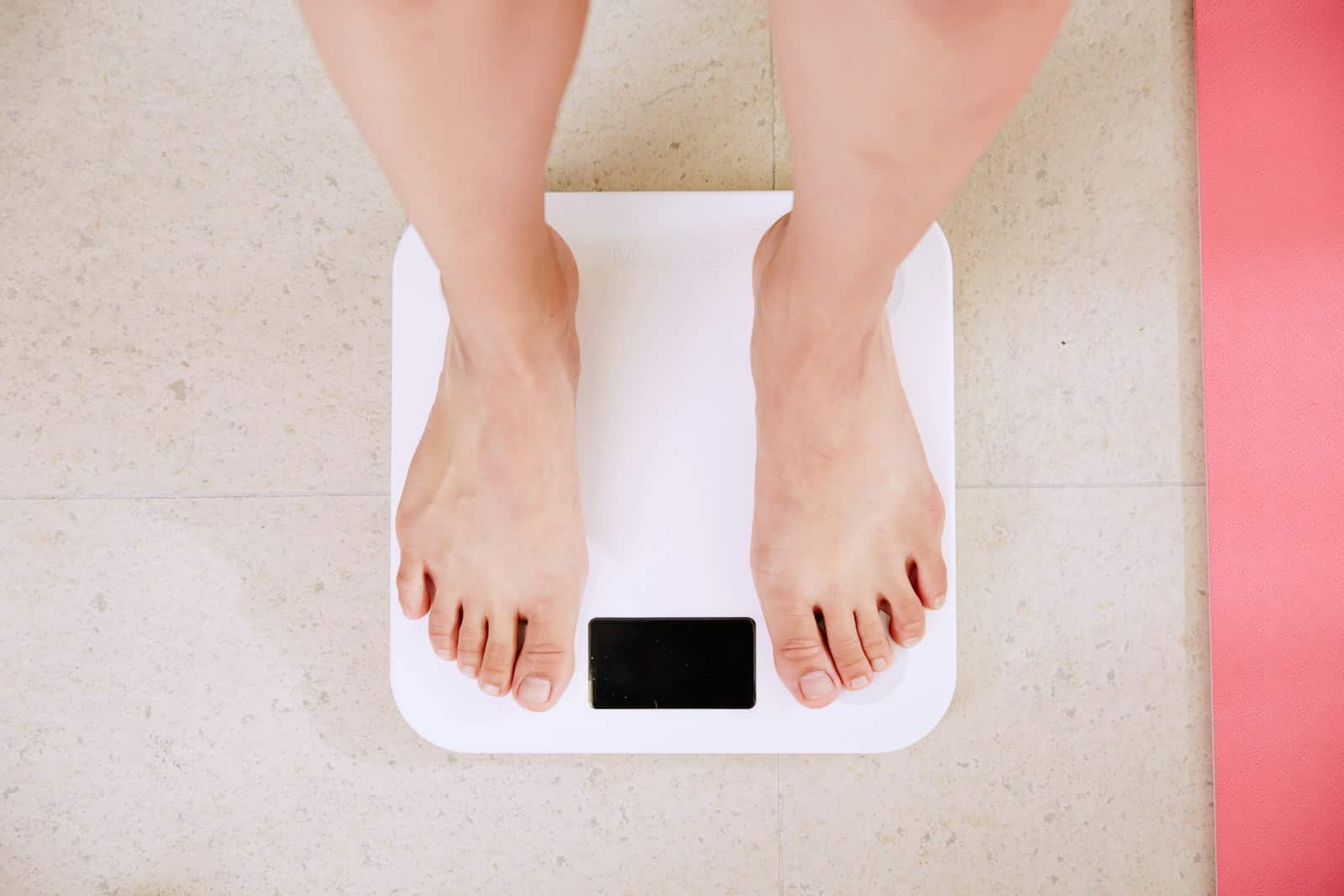
 More than one in three Georgia adults had obesity in 2025, which works out to a rate of 35.9%. Twenty other states landed at 35% or higher when the Centers for Disease Control and Prevention (CDC) released its numbers in September. Height and weight are all it takes to get a body mass index (BMI), the number behind all 21 rates.
A high BMI still means something, with more risk of type 2 diabetes and high blood pressure, plus heart disease and some types of cancer. Even the CDC notes that athletes “may have a high BMI because of increased muscle mass,” and the formula leaves out age, sex, and waist size as well.
How the BMI Formula Works
We owe the BMI formula to Belgian mathematician Adolphe Quetelet who worked it out between 1830 and 1850. The name “body mass index” came later from a 1972 paper by Ancel Keys and co-authors. Even back then the authors realized the index is not without issues, but found it satisfactory enough to promote. “at least as good as any other relative weight index.” in their own words.
To this day we use the same math equation: divide weight in kilograms by the square of height in meters. For a 5-foot-6 adult at 186 pounds, that comes out to 30.0, right where obesity starts.
Since the input is just height and weight, the BMI number can’t differentiate between fat tissue and lean tissue. Not taking into account what percentage of those 186 pounds is muscle and how much is fat is where many edge cases and limitations of BMI stem from. Despite them, the CDC calls BMI a “quick, safe, and reliable” screening measure for weight relative to height.
BMI Categories and BMI Prime
A BMI calculator handles feet and pounds or metric units and includes the weight category directly in the result. It is handy if it also reports BMI Prime, a relative score which is calculated as the BMI divided by 25. On that scale, the same 5-foot-6 adult scores 1.20, meaning they are 20% above the reference range.
The World Health Organization (WHO) defines the categories mostly based on the risk of disease associated with each one. Here is how the categories are defined, including BMI Prime and the level of risk:
- Under 18.5 (BMI Prime under 0.74): underweight, with a low risk of obesity-related disease but a higher risk of other health problems;
- 18.5 to 24.9 (0.74 to 0.99): healthy weight, average risk;
- 25 to 29.9 (1.0 to 1.19): overweight, increased risk;
- 30 to 34.9 (1.2 to 1.39): obesity class I, moderate risk;
- 35 to 39.9 (1.4 to 1.59): obesity class II, severe risk;
- 40 or higher (1.6 or higher): obesity class III, very severe risk;
A calculator which raises awareness of the health risks associated with various BMI levels would display the risk of dying and how elevated it is versus the baseline (normal BMI range). A given level of BMI in men is associated with a more elevated risk of all-cause death than the same number for women. For example, with a BMI of 30 a man has on average 70% higher risk of all-cause death against just 37% higher risk for women, if both are in the 35-69 age range.
The Health Risks Behind a High BMI
Behind that chart is a 2016 Lancet analysis that followed more than 10 million people on four continents. People who never smoked had the lowest death rates at a BMI between 20 and 25.
Above 25 the rates climbed, nearly doubling by obesity class II and close to tripling in class III. North America had the smallest jump of the four regions, though even there each 5 points above 25 added about 29% to death risk.
Type 2 Diabetes
With type 2 diabetes, the risk starts rising before BMI even leaves the healthy range. A 2026 review of more than 1.8 million Americans and Europeans found about 78% more risk at 22.5 to 24.9 than lower in that range.
Its authors wrote that current BMI classes “may not fully capture” that risk. At the far end, a 2001 study found the risk about 20 times higher at a BMI of 35 and above than in the healthy range.
High Blood Pressure
High blood pressure is the other big one, especially with fat around the internal organs. One 2015 review in Circulation Research linked excess weight to 65% to 75% of the risk for primary hypertension. That form of high blood pressure has no other medical cause behind it. The review’s authors traced part of it to the kidneys, which hold on to extra sodium as weight rises.
Heart Disease, Cancer, and Bad Knees
Past diabetes and blood pressure, the list keeps going, with heart disease and several cancers climbing alongside BMI. Researchers at Harbin Medical University in China pooled 21 studies in 2012 and found about 35% more risk of knee osteoarthritis for every 5 BMI points.
The WHO’s numbers are grimmer, with an estimated 3.7 million deaths in 2023 tied to a “higher-than-optimal” BMI.
Why BMI Means Different Things for Different People
Ethnic background is a factor which can change where the risk starts, especially for people of Asian descent. A WHO expert panel found in a 2004 report that many Asian people already face a high risk of diabetes and heart disease below a BMI of 25. The panel proposed extra action points along the scale, starting at a BMI of 23. Correspondingly, an option for Asian and South Asian users moves the overweight line to 23 and the obesity line to 25 in the BMI calculator.
Sex and age shift what a reading means too, according to CDC guidance for healthcare providers. On average, women carry more body fat than men at the same BMI. Older adults also have a higher body fat percentage than younger ones, meaning a 70-year-old grandmother and her 25-year-old grandson can have the same BMI reading of 27, yet carry very different amounts of fat. Thus the recommendations for further screening may be different in each.
When BMI Does Poorly as a Screening Method
Professional American football offers a clear look at how badly muscle mass can skew a BMI measure. A 2018 study in the Journal of Strength and Conditioning Research looked at 1,958 prospects from the 2010 through 2016 NFL Scouting Combines. Looking at just BMI labeled 53.4% of them obese. A body composition test put the figure at just 8.9% based on body fat percentage.
It should also be noted that fat around the middle section is a risk factor for type 2 diabetes and heart disease on its own. The National Heart, Lung, and Blood Institute associates a waist of more than 40 inches in men or 35 inches in women to higher risk of developing these conditions.
A new way of diagnosing obesity which doesn’t rely on BMI alone was proposed by a Lancet commission in January 2025. Over 76 organizations worldwide endorsed the report which calls for checking excess fat with waist size or a direct body fat test. It also separates “clinical” obesity, where excess fat already affects how organs work, from a “preclinical” stage. In that earlier stage, organs work normally but the long-term risk of disease runs higher.
Is BMI Still Worth Checking
BMI works best as a first check and its utility is in that it takes seconds to filter out those who might need a closer look from those who don’t. Waist size, blood pressure, and blood sugar tests fill the gaps that BMI is just not meant to cover. Georgia’s 35.9% on the CDC’s adult obesity maps works the same way, as a BMI-only figure that describes the state, not any single person.
A BMI of 25 or higher is enough for the U.S. Preventive Services Task Force to recommend diabetes screening in adults between 35 and 70. For Asian American patients, the task force says 23 “may be an appropriate cut point,” matching the WHO panel’s 2004 number. So a quick BMI check at home can be an early hint that a diabetes test is due.