 Southern Germany is made for slow travel. Between Munich and the edge of the Alps, the landscape opens into rolling meadows, quiet villages, and clear lakes that reflect the mountains like mirrors. The Bavaria Lake Loop ties these together in a single circuit — a few hundred kilometers of calm cycling through one of the country’s most timeless regions.
It’s not a route of extremes. The climbs are short, the roads smooth, and the rhythm steady. What makes it memorable is how much variety fits into a single ride — alpine scenery, monasteries, beer gardens, and small towns that still move at their own pace.
From Munich to Lake Starnberg
The loop usually begins in Munich, Germany’s cycling capital in practice if not in name. The city’s broad paths lead out of the center toward the south, passing through parks and quiet suburbs. Within an hour, the skyline of church spires fades behind you and the countryside takes over.
The first lake is Starnberger See, a deep blue basin stretching 20 kilometers long. It’s one of Bavaria’s largest lakes and historically a retreat for royalty — King Ludwig II’s summer palace still stands near the shore. The cycling path hugs the water for much of the way, alternating between shaded lanes and open views of the Alps on clear days.
Small towns like Tutzing and Bernried offer places to pause for coffee or a swim. Even in high summer, the atmosphere is relaxed — families paddle along the shore, and the sound of bicycle bells carries across the path.
Toward the Alpine Foothills
From Starnberg, the route bends southwest toward Kochelsee and Walchensee, two lakes connected by a short mountain road. Here the terrain rises slightly, giving a taste of the Alps without the intensity of full climbs. The forests close in, the air smells of pine, and the water changes color — from dark blue to turquoise.
Kochel am See, the town on the lower lake, has an art museum dedicated to the expressionist painter Franz Marc, who lived and worked here. It’s a reminder that Bavaria’s scenery has inspired not just travelers but artists for generations.
The road to Walchensee is short but steep. At the top, the reward is one of the most beautiful views in southern Germany: a mountain lake surrounded by peaks and forests, almost completely undeveloped. The cycle path continues along the north shore, quiet and shaded, where you can hear only wind and water.
Lakes and Monasteries
From Walchensee, the route turns north again through farmland and small villages. This stretch of Bavaria feels deeply traditional — whitewashed houses with flower boxes, church towers in every direction, and fields lined with hay bales.
The next major stop is Tegernsee, another lake framed by green hills and one of the region’s most famous resort towns. Despite its popularity, the atmosphere is calm. Locals swim, row, and gather in the large lakeside beer garden beside Tegernsee Abbey, a former monastery now home to a brewery and restaurant. The abbey’s terrace looks directly onto the lake — a perfect place to stop for lunch or a cold Helles beer.
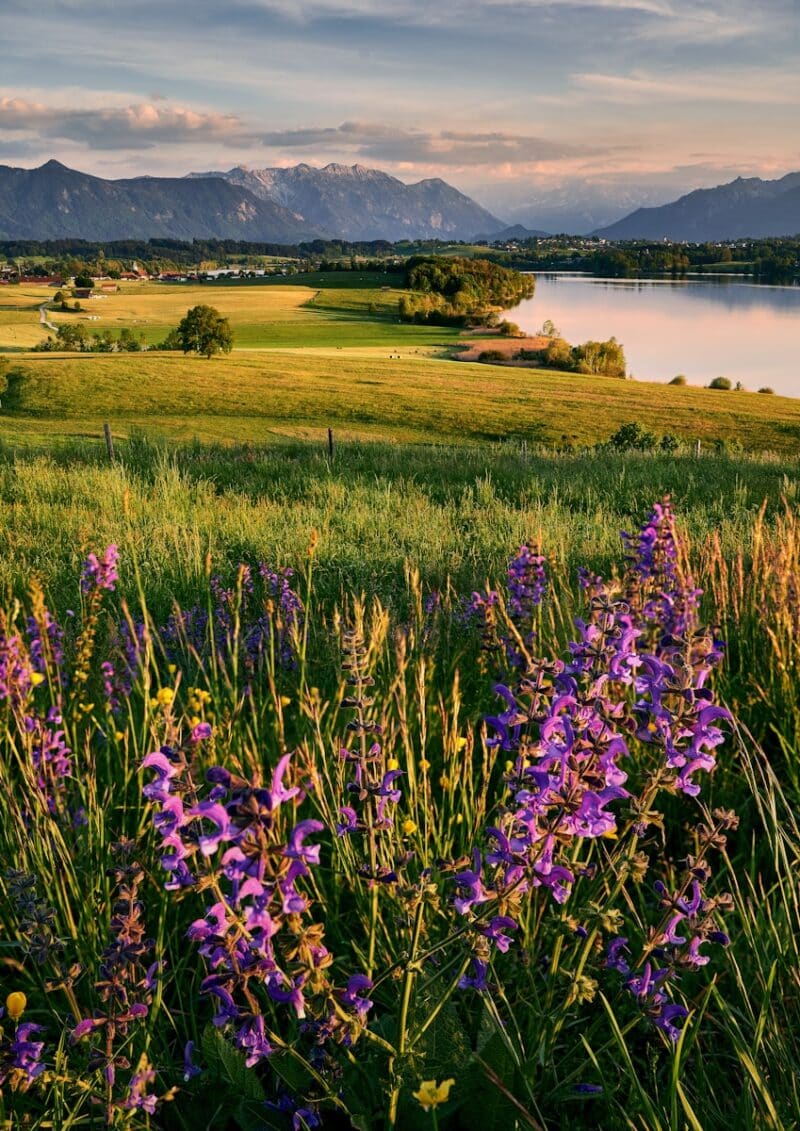
Beyond Tegernsee, smaller lakes appear one after another: Schliersee, Spitzingsee, and Staffelsee, each with its own rhythm. The roads linking them pass through pastures and forest edges where the smell of grass and wildflowers fills the air. You might ride for twenty minutes without seeing a car.
Everyday Bavaria
What makes this route different from more famous alpine rides is how ordinary it feels — in the best way. You pass farms with stacked firewood and vegetable gardens, local bakeries selling pretzels still warm from the oven, and small bus stops painted with murals of saints or mountain scenes.
Cycling here isn’t a sport; it’s part of daily life. Elderly couples ride to the next village, children pedal to school, and weekend riders glide along in small groups. The infrastructure reflects that — perfectly maintained bike lanes, frequent signposts, and plenty of benches and fountains for breaks.
For overnight stays, small Gasthäuser and guesthouses line the route. Rooms are simple but comfortable, often with balconies overlooking the meadows. Breakfasts are generous, and hosts are used to cyclists arriving dusty and hungry.
Back Toward Munich
The final stretch of the loop passes through Weilheim and Herrsching, then back along the shores of Ammersee, a lake known for its sailing clubs and sunset colors. The path here runs beside reed beds and small harbors, ending at wooden piers where locals dive into the water after work.
From Ammersee, it’s an easy ride back to Munich along flat country roads. The approach into the city feels smooth — the countryside fades but the rhythm of cycling stays constant. By the time you roll back into the city center, you’ve covered more than 250 kilometers, but it feels less like a journey completed and more like a long, slow day that never really ended.
The Season and the Experience
The best time to ride the Bavaria Lake Loop is between May and October. Spring brings green fields and snow still visible on the mountains; summer means longer days and swimming breaks; autumn adds golden trees and quieter towns.
The weather changes quickly in the foothills, so local cyclists often carry light rain gear year-round. But even short showers pass quickly, and the light afterward can transform the landscape completely.
Several Germany bike tours include this region as a highlight, often pairing it with short alpine detours or the Romantic Road to the north. The combination of lakes, villages, and reliable cycling infrastructure makes it one of Europe’s most accessible routes for both casual riders and longer-distance travelers.
Why It’s Worth It
The Bavaria Lake Loop isn’t about reaching a single landmark. It’s about connecting landscapes that have shaped how southern Germany lives — where the lakes provide water, the monasteries offer history, and the paths tie it all together in a way that feels balanced.
You finish with tired legs, a few sunburned freckles, and the sense that life here runs on steadier time. The lakes don’t rush; neither do the people who live around them. Cycling through this part of Bavaria means matching that rhythm — slow, practical, and quietly beautiful.