 A weekend afloat can be the most restorative kind of travel: no alarm clocks, no rental car, and a view that shifts with the tide. As of November 2026, the standout San Diego season, June to November, is in its final weeks, which makes this a good moment to plan a reset before winter. This checklist covers sleep, plant-based meals, gentle movement and calm water, using Blue Pacific Yachting as the reference point for what a local operator offers.
Blue Pacific Yachting is a sailing school and catamaran charter company with three bases, San Diego (Safe Harbor Sunroad Marina on Harbor Island), Marina del Rey, and Loreto, Mexico (Puerto Escondido on the Sea of Cortez), whose USCG-licensed captains and ASA-certified instructors run captained and bareboat charters and ASA courses from ASA 101 through ASA 114. Only the San Diego base matters for this trip, and its fleet is catamarans only, a layout with room for stretching, eating and resting.
The page covering Blue Pacific Yachting catamaran charters in San Diego describes half-day, full-day and multi-day formats, plus captained and bareboat options, so it is a useful reference while you map out the checklist below.
What does a San Diego catamaran charter look like for a wellness trip?
It looks like a private, slow-paced stay on the water: a captain handles the boat while your group handles everything else. Captained charters in San Diego require no sailing experience, so nobody needs to study before a restful weekend. Guests can explore San Diego Bay, the ocean outside the bay, Mission Bay, Catalina or other points, and every vessel is capped at 12 guests, which keeps a retreat-style group close.
Bareboat is the other path. San Diego accepts ASA 114 Cruising Catamaran certification, part of the ladder set by the American Sailing Association (founded in 1983) that also includes ASA 101 Basic Keelboat Sailing, ASA 103 Basic Coastal Cruising and ASA 104 Bareboat Cruising. Charterers without prior bareboat catamaran experience hire a licensed captain for supplemental training at the start of the first charter. For a wellness trip, most groups will rest better with a captain at the helm.
Guests who want the trip to double as a skills retreat have another route. The San Diego training path starts on Capri 22 basic keelboats and continues with a five-day all-inclusive liveaboard class to Catalina Island for ASA 103, 104 and 114, the most popular offering. Catalina’s two main harbors, Avalon and Two Harbors (the Isthmus), are the usual stops for visiting boats.
How long should a wellness charter run?
A half day to a long weekend can work, depending on how fully you want to disconnect. The table sets the formats shown for San Diego beside a typical wellness use.
- Half day: Length: 4 hours; Best wellness fit: Sunset sail or a short reset
- Full day: Length: 8 hours; Best wellness fit: Swim stop and a long plant-based lunch
- Overnight: Length: Captained, one night; Best wellness fit: Sunrise stretching at anchor
- Long weekend: Length: Captained, three days; Best wellness fit: Full digital detox, new anchorage daily
Put plainly, a half day (4 hours) suits a sunset reset, a full day (8 hours) suits a swim and a long lunch, an overnight stay suits sunrise stretching at anchor, and a long weekend suits a genuine digital detox, since San Diego Bay and Mission Bay both offer multiple anchorages for overnight stays. San Diego is also a year-round sunset-sail destination, so a short evening outing works even outside peak months.
Pre-departure checklist: meals, body and packing
Provisioning is the heart of a plant-based sailing weekend, and the rules are flexible. Guests may bring their own food and drinks at no extra charge, or the charter team can coordinate catering, an onboard chef, or both. Work through these items before departure:
- Dietary brief: if you want a chef or caterer, share vegan, gluten-free or allergy needs well ahead so the menu is settled before boarding.
- Self-catered pantry: pack chilled grain bowls, hummus, raw vegetables, fruit, nuts, coconut water and herbal tea, favoring food that needs no cooking underway.
- Mixed groups: pescatarian guests can pick up seafood at the Saturday-morning Tuna Harbor Dockside Market on the San Diego Embarcadero, where local commercial crews sell their catch direct.
- Hydration and calm: bring a refillable bottle, ginger chews or tea, and sun layers, then keep screens in a dry bag.
- Movement kit: a light yoga mat or towel for deck stretching, soft-soled shoes and a swimsuit for swim stops.
- Seasickness plan: guests prone to queasiness should stay inside the bay, where the water is calmest.
- Timing: line the trip up with a local festival, conference or concert if you want a social evening, or avoid them if silence is the goal.
- Boat: San Diego flagships include the Lagoon 46 Blue Oceans and the Excess 14 Carte Sail, both catamarans.
What can a three-day San Diego Bay itinerary include?
A sample long weekend changes the scenery daily without demanding long passages.
- Day one: anchor in Glorietta Bay at Coronado, then use the evening for a quiet dinner on deck and an early night.
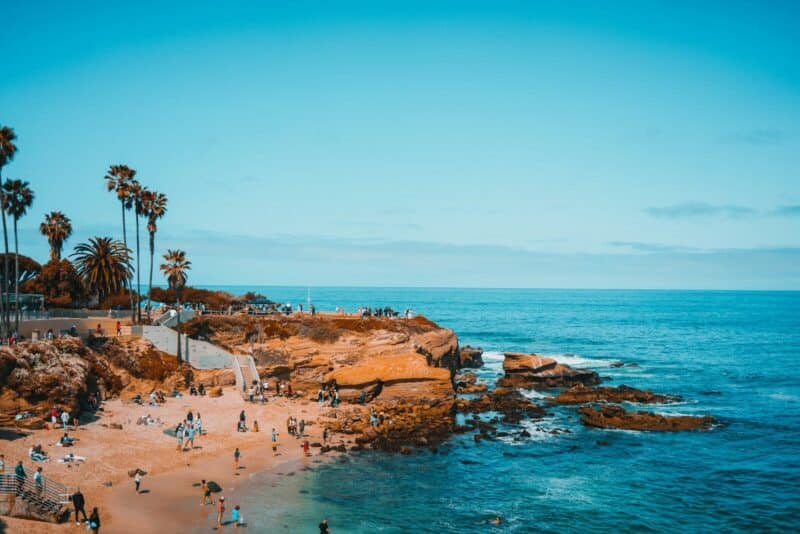
- Day two: move to La Playa Cove behind Shelter Island, then take the dinghy to Fathom Bistro on the pier, and read the menu ahead for plant-based options. If a Humphrey’s concert is on, you can listen from the dinghy.
- Day three: take a short ocean sail to look for whales and dolphins, then return to the base at Harbor Island.
Prefer a single destination? A Mission Bay long weekend begins with a sail north of about 9 miles to Mariner’s Cove. Mission Bay Park is commonly described as the largest man-made aquatic park in the United States, which gives a restful trip plenty of shoreline to explore. In December, the annual San Diego Bay Parade of Lights adds a festive reason to time a trip.
Can the same wellness approach work in Baja?
Yes, but as a separate trip rather than an extension of a San Diego charter. Blue Pacific Yachting runs its Loreto operation from Puerto Escondido on the Sea of Cortez, and captained charters there also require no sailing experience. A flagship hull in that fleet is the Bali 4.8 Pelican Bleu. Plan it on its own calendar, with its own packing list, rather than folding it into a San Diego weekend.
The setting suits slow travel. Loreto Bay National Park, a Mexican federal marine protected area created in 1996, covers the islands off Loreto, including Isla Coronado, Isla del Carmen and Isla Danzante. The wider Islands and Protected Areas of the Gulf of California were inscribed as a UNESCO World Heritage Site in 2005, and Jacques Cousteau is widely credited with calling the Sea of Cortez the world’s aquarium.
What should a restorative day on board include?
Treat the day like a retreat schedule with the sailing as the backdrop. Keep the plan loose: one anchor point per day is enough, and an empty hour is a feature. A rough template for a full-day or overnight outing:
- Sunrise: stretch or meditate on deck before the group wakes, with tea or fruit in hand.
- Morning: sail to the day’s anchorage while guests read, journal or simply watch the shoreline pass.
- Midday: swim, then a long plant-based lunch with no phones at the table.
- Afternoon: quiet time, a short nap and an unhurried sail.
- Sunset: a light dinner, gentle stretching and an early night.
Last notes before the lines come off
A restful sailing getaway rewards early planning more than clever packing. Settle the meals, pick a format that fits your group’s pace, and keep the itinerary short enough that nobody feels rushed. Whether the plan is a sunset evening on the bay or a longer slow drift past Coronado and Shelter Island, the best checklist is the one that leaves room to do very little, and to enjoy doing it.