
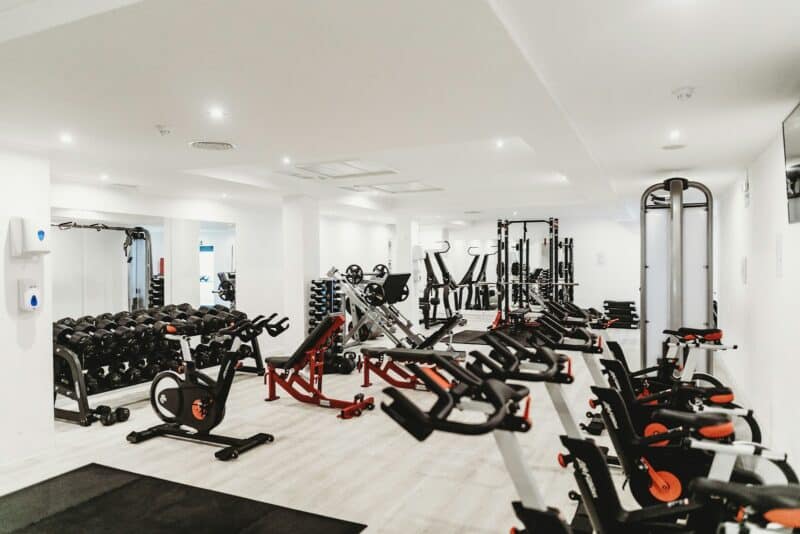
 Deciding whether to sign up for a gym or stick to home workouts is one of the most common dilemmas for people looking to improve their health and fitness. After all, it’s not just a workout decision but more of a lifestyle choice. Both options promise results, but they do so in very different ways. One isn’t necessarily better than the other as it all comes down to your personal goals, budget, lifestyle and even your personality type.
Why People Choose the Gym
Benefits
Access to equipment
Gyms are built to offer variety. From cardio machines like treadmills, bikes and rowers to heavy free weights and specialised resistance equipment, you’ll find tools that are hard to replicate at home. This variety is especially valuable if your focus is on building strength or you like to mix things up to avoid getting less boring and more fun.
Classes and trainers
Most gyms include group fitness classes such as spin, yoga, zumba or high-intensity interval training (HIIT). These classes add structure to your workouts and often provide a sense of accountability as it’s harder to slack off when an instructor is calling out reps. Personal trainers are another drawcard, giving you expert guidance and helping you progress safely.
Social motivation
Exercising around others can provide a boost. Seeing other people lifting, sweating and putting in the work can inspire you to do the same. For some, the gym is also a social outlet and a place to meet people with similar interests or simply be part of a community.
Drawbacks
Cost
Memberships vary widely, but even budget gyms require a monthly fee. Add on extras like classes, personal training or premium facilities, and the costs can stack up quickly. This can be a sticking point if you’re unsure about how consistently you’ll go.
Commute and time investment
Unless you live right next to your gym, getting there and back takes time. For people with busy jobs or families, this extra commitment can make workouts feel like a burden rather than a release.
Crowds
Anyone who has tried to work out at 6 pm on a weekday knows how frustrating peak hours can be. Waiting for equipment or working out in a crowded environment may impact your motivation and willingness to stay consistent.
Limited flexibility
Even 24-hour gyms have their limits. Maybe you don’t want to head out at 10 pm or 5 am. Compared to rolling out a yoga mat in your living room, the gym is inherently less flexible purely because of more friction.
Why People Choose Home Workouts
Benefits
Convenience
The biggest advantage of home workouts is that they’re always available. You don’t need to pack a bag, commute or wait for equipment. This convenience makes it much easier to stay consistent.
Flexibility
Home workouts can fit around your schedule. Whether you’ve got a 20-minute break in the middle of the day or prefer late-night training, you’re in control. The less frictio makes your fitness regimen les of a chore.
Affordability
Many effective home workouts require little more than your bodyweight, a resistance band, or a set of dumbbells. Picking quality home gym equipment always helps. There’s a one-time investment in equipment, but overall it’s far cheaper than paying membership fees.
Privacy
Some people feel uncomfortable working out in front of others, especially when they’re starting out. Exercising at home offers the freedom to try new movements without feeling self-conscious.
Drawbacks
Limited Variation
Unless you’re willing to invest heavily, you won’t match the equipment variety of a gym. While this doesn’t matter for many cardio or general fitness routines, it can limit progression if your main focus is strength training. It can also restrict the amount of variation you can do due to limited equipment.
Lack of accountability
Nobody is waiting for you at home, and skipping a session is as simple as deciding you’ll “do it tomorrow.” Without external accountability, motivation can dip.
Distractions
Home comes with its own challenges: kids, chores, phones, or even the lure of the couch. If your environment isn’t supportive, staying focused can be harder than in a dedicated gym space. Strong internal motivation and self-discipline are key.
Factors to Consider Before Deciding
Contemplating a host of different factors before taking the final call would lead to a more balanced and well-thought-out decision:
- Goals: Strength gains may require a gym’s heavy weights, while weight loss or cardio fitness can be achieved almost anywhere.
- Budget: Gyms are ongoing costs, while home workouts often involve a smaller upfront spend.
- Lifestyle: If you’re constantly pressed for time, home might be easier. If you enjoy structured environments, the gym could suit you.
- Personality: Extroverts might thrive in a gym’s social energy, while introverts could prefer the focus of training alone.
So, Which One Wins?
The truth is, neither gym memberships nor home workouts are universally better. The right option depends on you.
- If you crave variety, accountability, and social energy, a gym membership could keep you consistent.
- If you value privacy, flexibility, and affordability, home workouts may be a better fit.
- If you want the best of both worlds, consider blending the two.
At the end of the day, consistency is the single most important factor. A gym membership won’t work if you never show up, and a home workout program won’t help if you constantly skip sessions. The “right” choice is whichever option keeps you moving regularly and makes fitness a natural part of your lifestyle.






1 comment
Your passion for the topic really shines through.