 There are few places in the world that can boost a cultural and religious heritage as deep-rooted as that of Israel. For centuries, it has been a place of pilgrimage for worshippers of the Abrahamic religions, an identity that has continued to the present day. Its ancient history dates back thousands of years ago and is the birthplace of the Israelite and Canaanite civilizations. The kingdoms of Israel and Judah emerged in the first millennium BCE, while during the classical era, the region saw the consecutive rule of several different empires, including the Achaemenid, Macedonian, Ptolemaic and Seleucid. This troubled history continued during the 2nd century BCE when independent kingdoms were conquered by the Roman Empire.
Nowadays, Israel remains a place of tremendous cultural importance, and many of those traveling to the area do so out of spiritual considerations. The country hosts a large number of religious landmarks that you should certainly visit when you arrive in Israel.
Jerusalem
It is certainly no surprise that Jerusalem is at the top of the list. As one of the holiest cities in the world, it is one of the most fitting places in the world for a pilgrimage. Full of history and culture, too, Jerusalem is certain to offer a one-of-a-kind experience that’ll enrich your mind and soul. The Old City, a 0.35 square mile walled area in East Jerusalem, is one of the most popular landmarks in the entire country. The layout of the Old City has been minutely mapped in maps over the last 1,500 years.
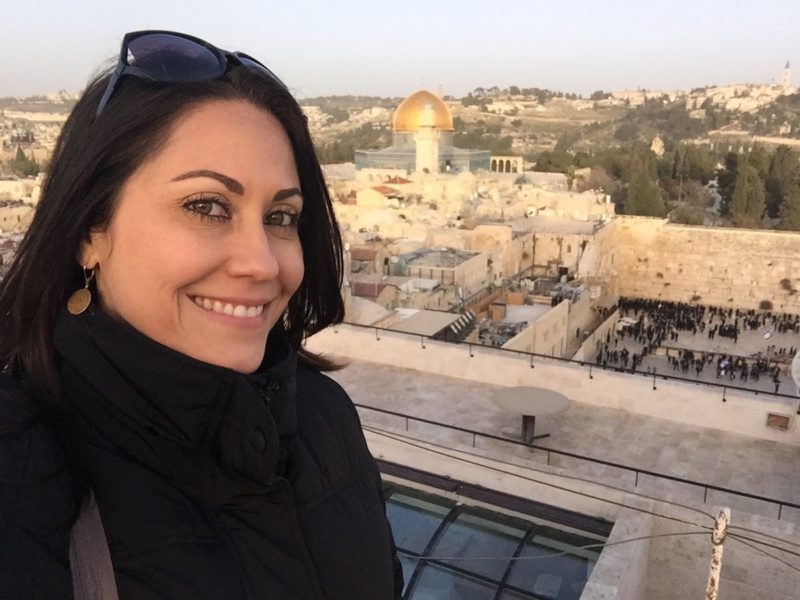
Traditionally divided into the Jewish, Muslim, Christian and Armenian Quarters, the Old City of Jerusalem is home to sites of great importance for the Abrahamic religions, including the Temple Mount and Western Wall for Judaism, the Dome of the Rock and al-Aqsa Mosque for Islam and the Church of the Holy Sepulchre for Christianity.
The Herodian Quarter and the underground city of David are some of the other major destinations you should add to your itinerary. A green pilgrimage in the area will enable you to complete a spiritual journey while completing activities relating to the natural heritage and environment of the country. You can also interact with the locals and get a glimpse of modern-day Jerusalem by visiting the Shuk Mahane Yehuda, a partially covered marketplace. There are nearly 300 vendors selling a wide assortment of fruit and vegetables, as well as meat, cheeses, baked foods, wines, clothing and other textiles, as well as houseware and Judaica, items pertaining to Jewish ceremonial arts which are used for ritual purposes, including Shabbat candlestick holders, Kiddush cups and netilat yediam.
The Negev
Evidence of humans living in this desert region in southern Israel dates back to at least 7,000 years ago. The Maon Synagogue is located here, well-known throughout the world for its remarkable mosaic flooring. While the exact age of the synagogue cannot be confirmed, historians are certain that it was built before the 6th century. The mosaic is remarkably intricate, featuring an array of animals, fruit, amphoras, as well as several Jewish ritual objects. The symbols of Judah, lions and palm trees are sitting near a menorah, with a shofar, etrogs, and a lulav painted in the immediate vicinity. Identical flooring designs were uncovered in the Gaza Synagogue, built in 508, leading some to believe the same artisans created them.
The Anim Synagogue is also located in the desert, approximately half an hour away from the city of Arad. Recognized as a National Heritage Site in Israel, the synagogue is located in the Yatir Forest, at the edge of the desert. It was used as a place of worship between the 4th and the 7th centuries, and the remains include a prayer hall facing Jerusalem, a courtyard, and an entrance. Remains of the mosaic flooring and small parts of preserved inscriptions can also be observed here.
The Galilee
Located in the northern part of Israel, this mountainous region is divided between Upper and Lower Galilee. The province is densely packed with areas of religious importance, so if you’re a visitor, there will be no shortage of pilgrimage locations to visit. Some of the most well-known include:
- Mount Meron: The village of the same name, located on the mountain’s slopes, is the location of the Tomb of Rabbi Shimon bar Yochai, a tannaitic sage that lived in ancient Judea during the 2nd century. Since the 15th century, the tomb has been a place of pilgrimage and is the most visited Jewish site in the world after the Western Wall, with as many as two million annual visitors. Hundreds of thousands of people visit the site every year on Lag BaOmer.
- Korazim Synagogue: The city of Korazim continued to develop in the aftermath of the Destruction of the Second Temple in 70 CE. The synagogue there was constructed out of black basalt and features a wide array of Jewish symbols, carvings, and inscriptions in Hebrew and Aramaic. An interesting discovery includes a stone seat, currently referred to as the “Chair of Moses.”
- Arbel Synagogue: Found next to the Sea of Galilee and near Tiberias, one of Judaism’s Four Holy Cities, this synagogue was possibly destroyed following a devastating earthquake in 749 CE. The door, made of limestone, still stands, while the building features decorative motifs and carved benches.
- Hammat Tiberias Synagogue: This 4th-century holy building includes classic Jewish symbols such as the Menorah lamp, shofar, a zodiac motif, as well as lions and geometric patterns.
Safed
Safed is a city in northern Israel, home to a large Haredi community and a center for Jewish religious studies, with a continuous ulpan ivrit core. The Jerusalem Talmud designates Safed as one of the five spots where fires were lit to mark the Rosh Chodesh, the birth of a new moon, and other festivals during the time of the Second Temple. Today, Safed has remained a favorite spot for those looking to study the Kabbalah. The city is rich in arts and culture as well.
Safed became a center of Jewish mysticism and philosophy following the expulsion of Jewish people from Spain in 1492, who made the city their new home. According to tradition, the town was founded by one of Noah’s sons following the Great Flood.
If you’re thinking about visiting Israel, you cannot miss out on its many religious landmarks. You’re guaranteed to leave the country with a newfound spiritual mindset and worldview.