
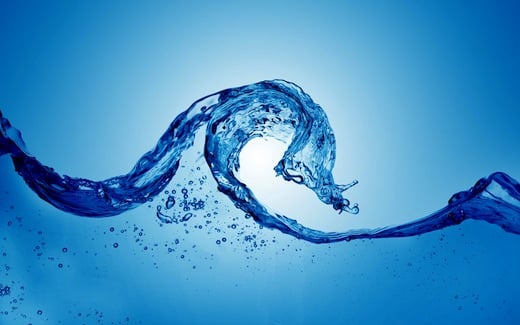
 Water has gradually become one of the more important natural resources that we are in danger of ruining. Not only are our natural water reserves being used up, the water we use on a daily basis is increasingly polluted. More and more people are becoming aware of the multiple sources of water contamination in our cities and are looking for pure sources of vital H2O.
The most common sources of contamination include: industrial pollutants from landfills, underground gasoline storage tanks, and municipal waste sites; pollutants such as chlorine and THMs, which infiltrate water supplies during distribution; and home contamination from older lead pipes.
With these different sources of danger, many people want reliable methods for ensuring water safety. This has led consumers to try water softening systems. Many have gone on to discover the common soft water problems, which are that these systems do little but exchange natural minerals for sodium ions that can be dangerous for our bodies and the environment.
What many consumers are discovering is the value of a hard water filtration system that does not include salts. Filtered hard water still contains vital nutrients such as calcium and magnesium, which help protect us against heart disease and stroke. What it doesn’t contain is the excess sodium that is inserted during the softening process. These salts are not only bad for our bodies, they are bad for the environment, disturbing aquatic ecosystems and crop cycles.
Other consumers are looking for better ways to manage water supplies and conserve water. If you’re looking to improve your conservation efforts, a rain barrel is a good option. Rain barrels collect runoff from a rain storm and this water can be filtered and used as drinking water. Or you can use it to water your plants, which grow better when nourished by natural water instead of chlorinated water.
Finding realistic solutions to conserve water is vital to ensure that not a drop is wasted. When looking for appropriate ideas, you could consider learning more about team poly water tanks. Team Poly designs are eco-friendly and ergonomic, meaning that you can tailor the tank to your outdoor living space, maintain a classic look, and make conserving water an active action and not a pipe dream.
Other ways to conserve water include limiting your wash cycles. Do you really need to run an entire cycle to clean one sock? You’d be better off waiting until you have a bigger load. Also, fix leaky faucets. That drip-drip-drip sound adds up to thousands of gallons of wasted water over time. It may also be a good idea to reduce the time you spend in the shower. Thirty minute showers use a lot of water and are truly unnecessary.
With water becoming an increasingly precious commodity, it’s important that we get realistic about what it is we need to maintain its supply in healthy ways, both for our nourishment and the environment’s. If we work together we can improve the quality of our water and ensure that it will be plentiful for future generations.






5 comments
This will be definitely
excellent- You now have a wonderful web-site and your website is very motivating
and exciting! Many thanks and also sustain the good creativity!!
This can be a really good read for me, Must say that that you are one of the best bloggers I actually
saw.Thank you for posting this useful post. It’s been so very much appreciated!
Today, I went to the beach with my children. I found a sea shell and gave it to my 4 year old daughter and said “You can hear the ocean if you put this to your ear.” She placed the shell to her ear and screamed.
There was a hermit crab inside and it pinched her ear.
She never wants to go back! LoL I know this is totally off topic but I had to tell someone!
Much appreciated!
Incredible points. Sound arguments. Keep up the good work.
This design is spectacular! You obviously know how to keep a reader entertained.
Between your wit and your videos, I was almost moved to start
my own blog (well, almost…HaHa!) Excellent job.
I really enjoyed what you had to say, and more than that, how you presented it.
Too cool!