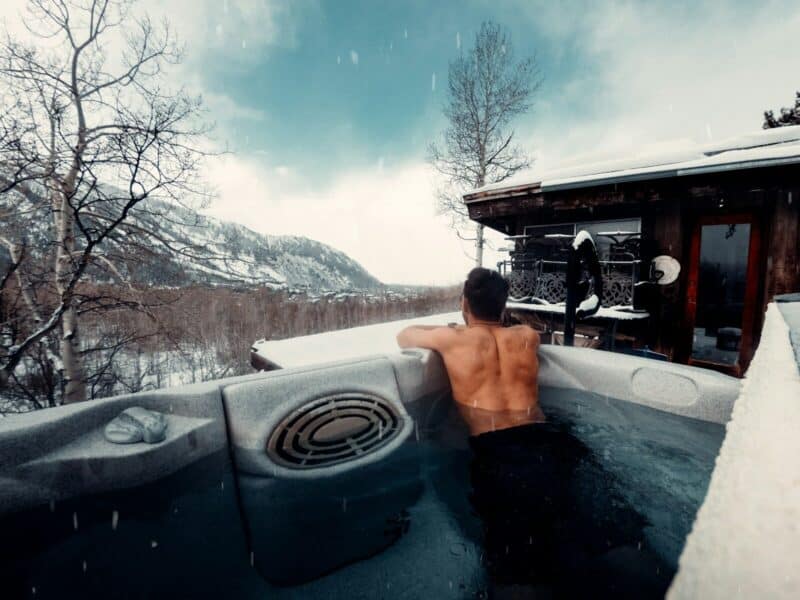
 A properly maintained hot tub is safe to run in freezing temperatures, and most modern spas are engineered specifically for it. Cold air isn’t the enemy. Still water is. As long as your spa has power, enough water, and a sealed cover, the plumbing keeps moving and never has the chance to freeze.
That single distinction — moving water versus stagnant water — explains almost every winter hot tub problem people run into.
Why Freezing Weather Isn’t the Real Threat
Nearly every spa built in the last two decades includes freeze protection. A temperature sensor watches the water, and when it drops toward roughly 40°F, the circulation pump kicks on automatically. Moving water resists freezing, and the pump motors themselves throw off heat inside the cabinet.
Three other design features do the rest of the work:
- Insulated cabinets. Full-foam or layered thermal insulation holds heat in the shell and plumbing.
- A tight, unwaterlogged cover. This is your biggest defense against heat loss—more than the heater itself.
- Continuous filtration cycles. Even when you’re not soaking, water is circulating on a schedule.
Run your spa through a cold snap, and it will hold 102°F without complaint. The heater simply works a little harder.
What Actually Damages a Hot Tub in Winter
Damage almost always traces back to one of these five things:
- A power outage. No electricity means no circulation. In sustained sub-freezing weather, water in the lines can freeze and crack a pipe or pump housing within 24–48 hours. If the power is out and cold is forecast, open the cabinet, place a space heater or work light inside, and cover the spa. If the outage will run long, drain the spa completely.
- Low water level. If water falls below the skimmer, the pump loses prime, circulation stops, and freeze protection can’t do its job. Check the level weekly all winter.
- A failing cover. A waterlogged, torn, or poorly latched cover bleeds heat, spikes your energy bill, and lets snow or ice load the panel until it sags.
- Shutting the spa off to “save money.” This is the most expensive mistake. Either run the tub or fully winterize it — drain it, blow out the lines, and remove the drain plugs. Half measures crack plumbing.
- Dirty filters. Restricted flow triggers flow errors, and a spa in error mode may stop heating entirely. Rinse filters monthly and rotate in a clean spare.
Your Winter Hot Tub Checklist
- Check and top off the water level every week.
- Rinse filters monthly; deep-clean and rotate a backup set.
- Test water chemistry weekly — sanitizer demand drops in cold water, but pH still drifts.
- Inspect cover seams, clips, and straps; replace a cover that feels heavy when you lift it.
- Keep chemicals, test strips, towels, and a spare filter dry and within reach. A weather-sealed deck box storage from Keter parked beside the spa keeps supplies from freezing solid or getting soaked in a winter storm.
- Clear ice from steps and decking using a calcium-chloride ice melt rather than rock salt, which corrodes metal hardware.
- Know where your breaker is before you need it.
Is Soaking Itself Safe When It’s Below Freezing?
It is, with normal precautions. The temperature swing between air and water feels dramatic, but the risk comes from how you handle the transition, not the cold.
- Keep water at 100–102°F. The industry maximum is 104°F, and higher isn’t better.
- Limit soaks to 15–20 minutes, then cool down.
- Hydrate before and after. Skip alcohol — it accelerates overheating and impairs your judgment about how long you’ve been in.
- Have a robe and non-slip footwear within arm’s reach, and dry your hair before you head inside.
- If you’re pregnant, or you have heart disease, low blood pressure, or diabetes, talk to your doctor about safe soaking.
- Never soak alone if you’re unsure how your body will respond.
A Note for Lowcountry Owners
Coastal South Carolina only sees a handful of hard freezes a year, which is exactly why they catch people off guard. Owners who never think about freeze protection in November get a three-day cold snap in January with a waterlogged cover and a half-empty spa. If you’re comparing hot tubs for sale in Charleston, SC, ask specifically about the insulation type, the cover’s R-value, and how the freeze protection system behaves during a power failure.
Frequently Asked Questions
What temperature is too cold for a hot tub? There isn’t one, as long as the spa has power and water circulating. Spas run reliably well below 0°F. The concern is outage duration, not the thermometer.
Should I turn my hot tub off in the winter? No. Reheating from cold costs more than maintaining temperature, and an unpowered spa in freezing weather is at real risk of cracked plumbing.
Does running a hot tub in winter cost much more? Expect a modest increase. A quality cover and clean filters matter more to your bill than the outdoor temperature does.
Can snow damage my hot tub cover? Heavy accumulation can. Brush it off gently with a soft broom — never a shovel or scraper.